“A working knowledge of occult science…is indispensable to UFO investigation.”—Trevor James Constable
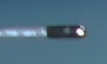 I’ve mentioned a number of times that paranormal entities of all varieties seem unable or unwilling to cause serious harm to humans. However, I’ve also mentioned that this does not appear to be the case in Brazil, where they seem to play by a different set of rules. There have been numerous instances of UFO related injuries and deaths in that country, primarily involving an unusual type of UFO described as being about the same size and shape as a refrigerator, hence the title.
The first case that we’ll look at didn’t have anything to do with these particular types of objects, but it did take place in Brazil and is probably the most famous incident in which a UFO may have had something to do with two unexplained deaths. Most of what follows was taken from Jacques Vallee’s book Confrontations, but some details were obtained from other sources. I’m not sure how reliable these other sources are, but I trust Vallee completely. So here’s at least a fairly accurate description of what happened.
In 1980, Vallee travelled to South America to investigate a number of mysterious deaths seemingly connected to UFOs that had occurred in Brazil. While there, he visited the site where two men who had been involved with a spiritualist group had been found dead in August of 1966. They had died on top of a hill in a suburb of Rio de Janeiro under circumstances that the police have never been able to satisfactorily explain. This case was of interest to the world’s greatest ufologist because an unusual light had been seen by multiple witnesses hovering over the hill on the night that the men most likely died. He was accompanied by, among others, a Rio detective who specialized in unsolved cases and a witness who had seen the bodies and was the first to report the deaths to police.
The bodies were found lying side by side with no evidence of violence. Next to each of the bodies was a crude metal mask, and police found a handkerchief with the initials AMS on it. They also found a note that read “Meet at the designated spot at 16:30 pm. At 18:30 pm, ingest the capsules. After the effect is produced, protect half of the face with lead masks. Wait for the prearranged signal.” The two men were identified as electronics technicians Miguel Jose Viana, 34, and Manuel Pereira da Cruz, 32. An autopsy revealed no trace of poison from any pills that they might have taken. He ruled the cause of death in both cases to be cardiac arrest. Two men in their 30s both simultaneously dying of heart attacks seemed pretty unlikely to investigators, but later autopsies performed by another doctor didn’t turn up anything to dispute this finding. The date of their deaths could only be narrowed down to sometime between August 17th and 20th.
If those last few sentences seem ridiculous to you, remember that this was Brazil in 1966. Forensic pathology has come a long way since then. It’s also noteworthy that the man who had seen the bodies told Vallee that although they appeared to have been dead for a while, there was no smell of decay and scavengers had left them alone.
Both men were from the town of Campos and had taken a bus to Rio on the morning of the 17th. They told friends and relatives that they were going to Sao Paolo to purchase a car and some electronic equipment. They supposedly had around $1000 dollars on them, although one relative told police that he doubted that either man actually had access to that kind of cash. Again, it was Brazil in 1966. That was a lot of money for someone in a poor country to have been carrying around at that time. Police considered robbery to be a possible motive for murder, but there was just no evidence to support that. And since the whole Sao Paolo story was a lie to begin with, they weren’t certain that there had been any money to steal.
 This pair of mysterious deaths would have gone relatively unnoticed by the general public if not for the fact that a highly respected citizen of Rio and her children reported to the police that they had seen an orange, oval shaped object emitting blue rays in all directions hovering over the hill on the night of August 17th. More witnesses then came forward and also stated that they had seen the same thing that night. The police were stymied by what to do with this information. It’s not like you can put out a warrant for a big arrange egg with a blue halo.
When they searched Miguel’s workshop, they found some other lead masks like the ones found next to the bodies and a book on “scientific spiritualism” with underlined passages concerning how to contact spirits, intense luminosity involved in this process and the need for lead masks. Family members confirmed that the men were members of a spiritualist group, but they didn’t know much about it. Other members of the group told police that they had participated in some occult experiments with the two men. Rumors had been circulating around Campos that the group was also trying to communicate with other planets. A few days before their deaths, Manuel had told some people that he was about to conduct a “final test” that would determine whether or not he was a believer.
It’s worth noting at this point that spiritualism, more correctly called spiritism, is about as common in Brazil as yoga classes are in upscale American suburbs. The same is true of Indonesia, where the jin kurcaci are allegedly snatching people, and John Keel suspected that all of the weirdness that was going on around Point Pleasant, West Virginia in the 1960s had been triggered by someone in the area practicing black magic. So is there some connection between UFOs and trying to contact the spirits of the dead? There does seem to be an apparent overlap in that area, although many would dispute that. But there are some highly knowledgeable and credible individuals who would agree that this might be the case, especially the ones who have seen dead friends and relatives in connection with their abduction experiences. I’m sure that I’ll have more to say on this in the future.
So anyway, police suspected that there might be an unknown ringleader of the spirit group, probably whoever wrote that note found with the bodies. Miguel and Manuel may have been seen talking to a blond man at the base of the hill on the afternoon of the 17th, just before they began their ascent. The witness who reported this wasn’t sure that it was them, but it seemed likely given that his description matched what they were wearing. Naturally, attempts to locate this unknown blond man led nowhere.
So what were these guys up to and what happened to them? Other UFO sightings had occurred in the area of the hill shortly before their deaths. Could that have been why they went there? While I think that it would be jumping to conclusions to assume that a UFO killed them, it is interesting that the witness who had seen the bodies pointed out to Vallee exactly where they had been found, and 14 years later there was still no vegetation growing on that spot in an otherwise overgrown area. Without even a plausible cause of death, and none likely to be forthcoming at this point, it’s unlikely that we’ll ever have any satisfactory answers as to what transpired on that night.
While this may have been Brazil’s most famous UFO death case, it’s far from being the only, or even the first UFO related fatality in that country. The first one that we know of predates what is generally considered to be the modern era of the UFO by a year.
In 1946, Joao Prestes Filbo was returning home after having spent the day fishing with a friend near the Brazilian village of Aracriguama. As he reached his front door, he was hit by a beam of bright light that blinded him and caused him to collapse. He managed to make his way to his sister’s house, but his condition rapidly deteriorated. Witnesses stated that his flesh seemed to be coming detached from his bones. He felt no pain but was understandably terrified. Pieces of skin and flesh began falling off, and neighbors placed him in a cart to take him to a hospital. He died on the way, less than six hours after the initial incident. By the time they returned to the village, the corpse already looked decomposed. A police investigation turned up nothing. Since no autopsy was performed, we have no idea what might have caused his condition.
We don’t really even know that what happened to this man was UFO related since no unusual object was seen at the time, but in light of what was to come 31 years later, it’s not too much of a stretch to make that assumption.
 The late 70s into the early 80s was when the defecation really struck the rotary ventilator in Brazil as far as UFO attacks are concerned. At least six people were killed and dozens more were injured in northeastern Brazil between 1977 and 1982, usually by concentrated beams of light fired from low-flying objects, frequently ones described as being rectangular boxes the size of a refrigerator. These were commonly referred to as “chupas” by the locals. Four of the fatalities and most of the injuries happened to men on overnight hunting trips which are common in northern Brazil. It’s so hair-meltingly hot there that even animals don’t move around much during the day, and hunters have a better chance of bagging game late at night. It was standard practice for them to take a hammock with them to string up between trees once they were done hunting to try to get some sleep before heading back home in the morning. This was when most of the men were attacked.
Incidentally, Terry Sherman, patriarch of the family that formerly owned the now infamous Skinwalker Ranch, once saw and stalked a similar object that he witnessed flying low over his property one night. It flew slowly, shining a searchlight over the ground beneath it as it moved back and forth over a pasture, as if it were looking for something. It’s probably lucky for him that this thing seemed to be searching for something else and either didn’t know or didn’t care that he was there.
A Dr. Carvalho on the island of Colares near the town of Belem told Vallee that she had treated 35 people, including a woman who died, for injuries and illnesses related to the chupas between September and November of 1977. She made note of a number of symptoms affecting all of these patients, including weakness, dizziness, headaches, and a pallid complexion. Their skin was black and numb where the beams had hit them, but they also had round, purple marks on them that were hot and painful. Inside each of these purple circles were two red puncture marks that resembled mosquito bites. All of her patients also experienced anemia due to a loss of red blood cells. The victims reported that the beams that struck them were painfully hot and had immobilized them before slowly withdrawing. These beams were reported to be highly concentrated with sharply defined edges and were about 3” in diameter.
Based on their effects on the victims, Vallee concluded that these were beams of radiation that contained pulsed-microwaves, which can cause physical and neurological damage. He also quotes Dr. Keith Florig, an expert on high-power microwaves, who points out that although an HPM weapon could be used to disable a human target while causing only minor injuries, that same beam could easily kill the person if it were used at close range. So might the chupas only be guilty of manslaughter and not murder? Maybe they only intended to cause some short-term damage to their victims for some reason, but in a few cases they got too close and accidentally killed the person. Florig also mentions the disgust and moral outrage that people would feel toward any government that used such a weapon to roast people from the inside. That sounds like it could be what happened to Joao Prestes Filbo in 1946. Maybe whatever hit him with that light had no idea how badly it would injure him. Maybe that’s why they didn’t try it again for over 30 years. Maybe. Make of this what you will.
For several months in 1977, UFOs of many descriptions were making nightly appearances over Colares. Once word of the number of injuries that had occurred got out, everyone who could afford to do so fled the island, including most local officials. Dr. Carvalho, who could have left, stayed to care for the injured. Those who had no choice but to remain began staying up all night to avoid being ambushed in their sleep. Mobs took to the streets, chasing the objects in the sky while banging on pots and trash can lids and shooting fireworks at them, which had to have been quite a spectacle. Dr. Carvalho herself saw a cylindrical UFO that gave off two concentric halos of purple light that surrounded it. She described it as being the most beautiful thing that she had ever seen and said that she had wanted it to land and take her with it. Considering how much damage she had seen these things do, that must have been some UFO. However, there were no reports of anyone being harmed by anything other than the chupas. Round objects were also seen shining lights down into the forest at night, but they never harmed anyone that we know of.
The Brazilian army sent two teams to the island during the height of the UFO activity. Although they weren’t supposed to talk about why they were there, it didn’t take a genius to figure it out. They were seen openly filming and photographing the objects. Naturally, none of these films or photos have ever been seen by the general public. According to Vallee, they were sent there to try to establish contact with these things, but I don’t know how he knows that.
 This sounds like it must have been the biggest Chinese fire drill in paranormal history. While the military was trying to document and make contact with the objects, gangs of citizens were chasing after them, banging on pots and shooting off fireworks. Whatever intelligence was behind all of this, if it/they have any kind of a sense of humor at all, they must have been laughing their asses off at us. Either that, or just shaking their heads in disbelief.
I don’t know about you, but I don’t particularly like the idea that these things are laughing at us. In fact, I really don’t like the idea that these things are laughing at us while they’re also shooting death rays at us. The least that we could do is die with a little bit of our dignity still intact. I know that I’m not going down with a garbage can lid in one hand and a bottle rocket in the other. I’ll have my rubber chicken to protect me.
So that about wraps it up for the flying Brazilian refrigerators of death, except for the possibility that this may still be going on down there. If you happen see one of these things flying around in your neighborhood, you might want to take cover…or bang some pans together and throw a sparkler at them.




 disappear in the jungle. He assumed that this was just a local legend, but he had enough sense to know that it’s best to honor regional customs. One of the other members of his team was not so culturally sensitive and wore a pair of yellow socks, because what man doesn’t have a pair of yellow socks to wear while trekking through the jungle?
 none of the others were able to see them. He described them as others have: with tiny noses and small, black eyes and broad mouths that extend across the width of their faces. When they smile, which they apparently do fairly often, their faces take on a particularly demonic and disturbing appearance, like a real life jack-o-lantern. He did not remember what happened to his friends, but he vaguely remembered being given food by some of the jin kurcaci who seemed concerned for his health and apparently wanted him to survive and be found so that he could warn people about the dangers of the jungle. Possibly some of these creatures do not agree with the abduction of humans by their own kind, or maybe it’s just not a place that’s safe for people to be.
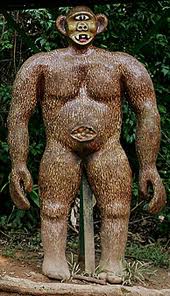 mapinguari is its own creature and deserves to be recognized as such. And since they weigh in at an estimated 500 pounds and have long, sharp claws, I wouldn’t want to be the one to tell them otherwise.
 And yes, Dr. Oren does believe that they can paralyze people, but it has nothing to do with magic and everything to do with biology. He thinks that the powerful smell that they emit contains scent molecules that act as a relatively mild neurotoxin which confuses and sometimes paralyzes predators – a very effective defense mechanism for a slow-moving creature that lived in a time of much larger and fiercer hunters than any that we have today. A hammered sabre tooth would be much easier to get away from than a sober one. And although I still can’t figure out how anyone knows what mapinguari skin looks like under all of that fur, it does turn out that skin remnants of megatheriums reveal that their hides contained ossicles—little bone chips similar to that found in alligator skin which provided them with a sort of natural armor. If the mapinguari are actually megatheriums, this could explain why bullets have no effect on them. The similarities between the two just kept on piling up, and one might even suspect at this point that Dr. Oren was starting to use his brain as something more than a file cabinet, which almost never goes over well with the established scientific community, especially when it comes from a field operative doing actual work in the real world.
 A couple of parting thoughts: