“It would be so nice if you weren’t here.”—comment made to Charles Grodin
What should be one of the most well-known poltergeist cases of all time is one that is almost completely unknown and was not even investigated until a decade after it ended. If it hadn’t been stumbled upon by a history buff doing some research in the area in the mid-1970s, it might never have been heard of outside of the little town in which it occurred. He interviewed the family and a number of witnesses, then called paranormal author Colin Wilson to see if he would be interested writing something about the case. It turned out that he was.
Pontefract is a small hamlet in the UK that dates back to Roman times. In Latin, the name means “broken bridge,” so apparently at some point long ago, a bridge broke somewhere around there. There had also once been a monastery for Cluniac monks nearby. One of these details is probably significant. If you were to try to guess which one at this point, you’d probably be wrong.
 The weirdness started in 1966 in a home belonging to a family named Pritchard. Jean and Joe Pritchard and their 12-year-old daughter Diane had gone on holiday, leaving their 15-year-old son Phillip and the house in the care of Mrs. Pritchard’s mother Sarah Scholes. One afternoon, Phillip walked into the living room where his grandmother was knitting and discovered that a fine, white powder was falling and covering everything in the room, including Mrs. Scholes, who had so far failed to notice. He looked up at the ceiling to see where this powder was coming from and discovered that it was only falling from about four feet in the air. The top half of the room was clear.
Once Mrs. Scholes became aware of the situation, she went across the street to fetch her other daughter Marie Kelly. Marie came over and also saw the powder falling. She went into the kitchen to get a broom and dustpan to clean up the mess and found a puddle of water on the floor. When she pulled up the linoleum to see if it had seeped up from under the floor, she found the boards underneath were dry. Over the next several hours, more puddles formed almost as fast as they could mop them up, even after they had shut off the water to the house. A repairman from the local water board came out, but he could find no cause for them.
Once the falling powder and mysterious puddles had stopped and been cleaned up, everyone left. That night, Phillip and Mrs. Scholes experienced some more typical poltergeist-type manifestations (although mysterious puddles of water aren’t really unusual in these cases*). They heard a crash and discovered that a potted plant at the foot of the stairs had been hurled up to the top landing. Moments later, a cupboard began to shake violently as if something inside was trying to get out. It stopped as soon as Phillip pulled the door open. There were also repeated banging sounds on the walls.
By 9:30, things had calmed down and they decided to go to bed. When Mrs. Scholes went into Phillip’s room to tell him goodnight, his wardrobe began rocking and swaying in the corner. At this point, they both decided that they’d had enough. They went across the street and spent the night at Marie and Victor Kelly’s house.
After they were asleep, Marie and Vic decided to go see a neighbor of theirs from down the street named O’Donald who had an interest in ghosts. Mr. O’Donald was still awake and agreed to go with them to the house. When they opened the front door, they were hit by a blast of frigid air, but found nothing else out of the ordinary as they searched the place. Mr. O’Donald then explained to them the difference between ghosts and poltergeists and mentioned that the latter were fond of tearing up pictures for some reason. After O’Donald had left and the Kelly’s were locking the door behind them, they heard a crash. When they went back in to investigate, they found that a framed picture from Jean and Joe’s wedding had been smashed on the floor. The glass was broken and the photo had been slashed in two, as if whatever was responsible for this had heard Mr. O’Donald talking and had taken his offhand observation as a suggestion.
All was quiet for the next two days until the rest of the Pritchard family returned home. When Phillip and Mrs. Scholes recounted the story of these occurrences to them, Joe Pritchard was unimpressed and asked what sort of banging they had heard. Right on cue, there were three loud knocks (these things usually seem to come in threes), followed by a rattling of the windows as a cold breeze blew through the house. Then the rattling and the wind subsided, and all was back to normal. Two years would go by until their next encounter with the unknown entity.
Almost exactly two years later, Jean Pritchard and Sarah Scholes were having tea in the kitchen when Mrs. Scholes mentioned the previous events and said that she feared that it was all about to start happening again. Jean dismissed the idea, but when she left to go upstairs, she found her daughter’s bedspread lying at the foot of the stairs. She was confused but not overly concerned. As she placed the covering back on Diane’s bed, she heard a crash. She went out into the hallway to find Phillip’s bedspread at the bottom of the stairs and several potted plants upended on the on the carpet.
Late that night, Jean woke up and stepped out into the hallway, presumably intending to check on the kids. She saw something moving at the end of the hall and turned on the light just in time to see a paintbrush go flying past her head. Her scream woke up the rest of the family, and for the next several minutes, they were all attacked by a whirlwind of paintbrushes and rolls of wallpaper. Only Diane was actually struck by one of the brushes, and although it was moving quite fast, she barely felt it hit her. When the flying redecorating supplies moved into her room, Joe shut the door and Diane spent the rest of the night in her parents’ room.
Typical poltergeist shenanigans continued for the next nine months. Fairly early on, they decided that what they needed was to have an exorcism performed on the house. Fortunately, the Anglican priest who visited them to discuss this option was aware that exorcisms frequently only made things worse in these sorts of cases. He advised the family to just move away before one of them got hurt. What he was unaware of is that people are rarely, if ever, seriously harmed by poltergeists. They seem to lack either the ability or the desire to really injure anyone, although threats of violence are not uncommon, usually scrawled on walls or mirrors and almost always directed solely at one particular person.
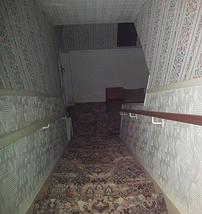 As if to demonstrate this, that night as Diane was heading up to bed, a large oak stand in the living room weighing several hundred pounds floated up the stairs and landed on top of her, pinning her there. However, she could tell that the full weight of the thing was not on her. She couldn’t push it off of her, but at least she wasn’t being crushed. She called out to her family for help, and they tried to pull it off of her, but it wouldn’t budge. As Diane realized that she didn’t seem to be in any real danger, she was able to relax a little. As she did so, she felt a change in the force that was holding her there. She asked her family to try again, and this time they were able to lift the stand and set her free. Afterward, although the whole ordeal had left her understandably flustered, she said that she had never really felt that she was in any serious danger. She seemed to sense that this thing felt no real malice for her. Nevertheless, it wasn’t done with her yet.
Diane went off to bed somewhat unfazed, but it was not to be a restful evening. Four times that night, she found herself being woken up by being flipped off of her bed and onto the floor with her mattress landing on top of her. Still, she suffered no injuries whatsoever. Whatever was doing this seemed to have more of a schoolboy crush than any desire to do her harm.
Not long after this, Jean ran into an acquaintance named Rene Holden, who had a reputation for being a bit psychic. Rene agreed to try to help the Pritchards deal with their unwanted guest. On one occasion while she was at the house for dinner, the lights went out and objects started flying all around the room. By the time they got the lights back on, all of this had stopped, but they found that almost all of the furniture had been flipped over and smaller items were scattered all across the room. The only exception was a table on which there had been a tray full of sandwiches. The tray and table were both left undisturbed, but all of the sandwiches were gone. Jean found one of them behind the television, and something with a large mouth and huge teeth seemed to have taken a bite out of it. Rene decided to keep the sandwich and wrapped in plastic, intending to use it as proof that something bizarre was going on in the house, but it disintegrated into crumbs within a few days.
Ever since this had begun, both Phillip and Diane had been suffering from a stomach ailment that got worse whenever Mr. Nobody, the name they had given their unknown intruder, started acting up. Diane described it as a feeling of being twisted up inside. Rene came to the conclusion that this entity was somehow drawing its power from the children through their solar plexuses (plexusi?).
As insightful and accurate as this might have been, it’s also not original. Poltergeists have long been believed by many to draw their power from people, typically a teenager and usually a girl. Also, the solar plexus is routinely mentioned by mystics as being a sort of hub for life-force energies, whatever that means. For instance, some people who have had out-of-body experiences have reported seeing a silver cord coming out of the stomach of their etheric body and connecting to the same point on their physical body. Nevertheless, we should probably give Mrs. Holden some credit for being aware of this. She also suspected that there was a connection between these experiences and the underground river running beneath their house, which was another good catch. Unusual phenomena of almost all sorts seem to have an affinity for water, and this probably has some correlation to poltergeists leaving puddles everywhere.
Despite being annoying and even destructive at times, Mr. Nobody also clearly possessed a sense of humor, along with a keen understanding of just who deserved to be made the butt of a good joke. The woman that he chose to make a complete fool of sounds like she would have made a good supporting villain in a Dickens novel.
Joe Pritchard’s Aunt Maude had heard all about the goings-on at her nephew’s house, and she considered it all to be nonsense. Upon arriving at the house to assess this foolishness for herself, she immediately annoyed her nephew by summarily announcing that it was all a prank being played by the children. No sooner had she made this accusation right in front of Diane and Phillip than the lights went out and the whole room was suddenly visible only by the glow from the fireplace in the kitchen where they were sitting. The refrigerator door then swung open, and a gallon jug of milk floated out. It made its way across the room and promptly emptied itself over Aunt Maude’s head, soaking her and the chair on which she was sitting.
After they got the lights back on, the suddenly lactose indignant Aunt Maude again accused the children of being responsible, to which Jean angrily replied that they had been by her side throughout the whole incident. But Aunt Maude didn’t want to hear it, so they invited her to spend the night, knowing from experience that Mr. Nobody probably wasn’t done with her just yet. Being the kind of person that I suspect can never admit that they’re wrong, Aunt Maude took them up on their offer, and ended up wishing that she hadn’t.
 After the lights went out again and some furniture flipped over and things flew out of the cupboards, they decided to go to bed. Maude, Jean and Diane were all bunking together in Phillip’s room for some reason. As they were about to call it a night, a lamp lifted off of the bedside table and floated out the door. Then four small light bulbs that had been removed from the electric fireplace glowed as they danced in the air around the door. This was followed by the appearance of two large hands that turned out to be Aunt Maude’s fur gloves hovering in the doorway. Maude told whatever it was to go away and threw one of her boots at the door. The gloves vanished but reappeared moments later. This time one of them made a beckoning gesture as if it wanted them to follow it. When no one moved, the glove clenched into a fist and shook itself threateningly at Aunt Maude. She responded by breaking into a rendition of “Onward Christian Soldiers.” Not to be outdone, the gloves began to move with the music as if conducting her singing. Despite being frightened, Jean said that couldn’t help but smile at this. Aunt Maude’s assessment of the situation was less lighthearted. She declared that they had the Devil in their house.
When Maude left the next morning, she said that she would never return. When Jean called to tell her that her gloves had turned up a few days later, she said that she would not be picking them up. When Jean returned them to her, she refused to touch them. She took them with a pair of garden tongs and burned them on the rubbish heap. I guess they still had rubbish heaps in West Yorkshire County back then.
Well this has taken much longer than I anticipated, and we’re just barely past the halfway point. So…
Tune in next week for the exciting conclusion of (pause for dramatic effect) The Black Monk of Pontefract!
__________________________________________________________________________________
*These puddles almost always have clearly defined borders and show no signs of spatter, as if they just somehow leak from a source near the ground. One theory is that they are a kind of condensation that forms around a release of energy. Hell if I know.




 Writing about the Mayan motifs found in some crop formations recently got me thinking about some of the various and fragmented things that I know about Native American history and mythology. Mostly, it got me thinking about Quetzalcoatl. Although I didn’t mention it because I think it’s silly, there are some who think that he was an alien and that this is why there have been so many Mayan themes included in these formations. I guess anything is possible.
 The main problem with all of this is that there had already been Mesoamerican cultures who knew how to do all of these things before then and that there is no evidence that any of them, including the Toltecs, ever worshiped just one god. No wonder most of the “experts” consider him to be a myth. But if he was a myth, where did the idea of a bearded white guy come from? In case you’ve never noticed, Native Americans with beards are extremely rare, and the ones in that region were pretty well bronzed as well.
 Can you see why I had to put off posting this when I originally planned two weeks ago? I started off just intending to write a piece about alleged white guys showing up in ancient Mesoamerican legends, and now I’m reporting on the results of genetic testing done on Native American skeletal remains. I ended up going so far off the reservation (pun partially intended) that I didn’t know where I was headed…and still don’t. There’s lots more; this just seemed like a good stopping point. I definitely see a Part 2 somewhere in the near future. Maybe not next week, but soon – although I fear that it might not amount to anything more than a smattering of loosely connected ideas and minutiae that I couldn’t find a convenient place to include here. I barely even mentioned the Mayan elements found in some crop formations that were the inspiration for all of this to begin with. Oh well, such is life.